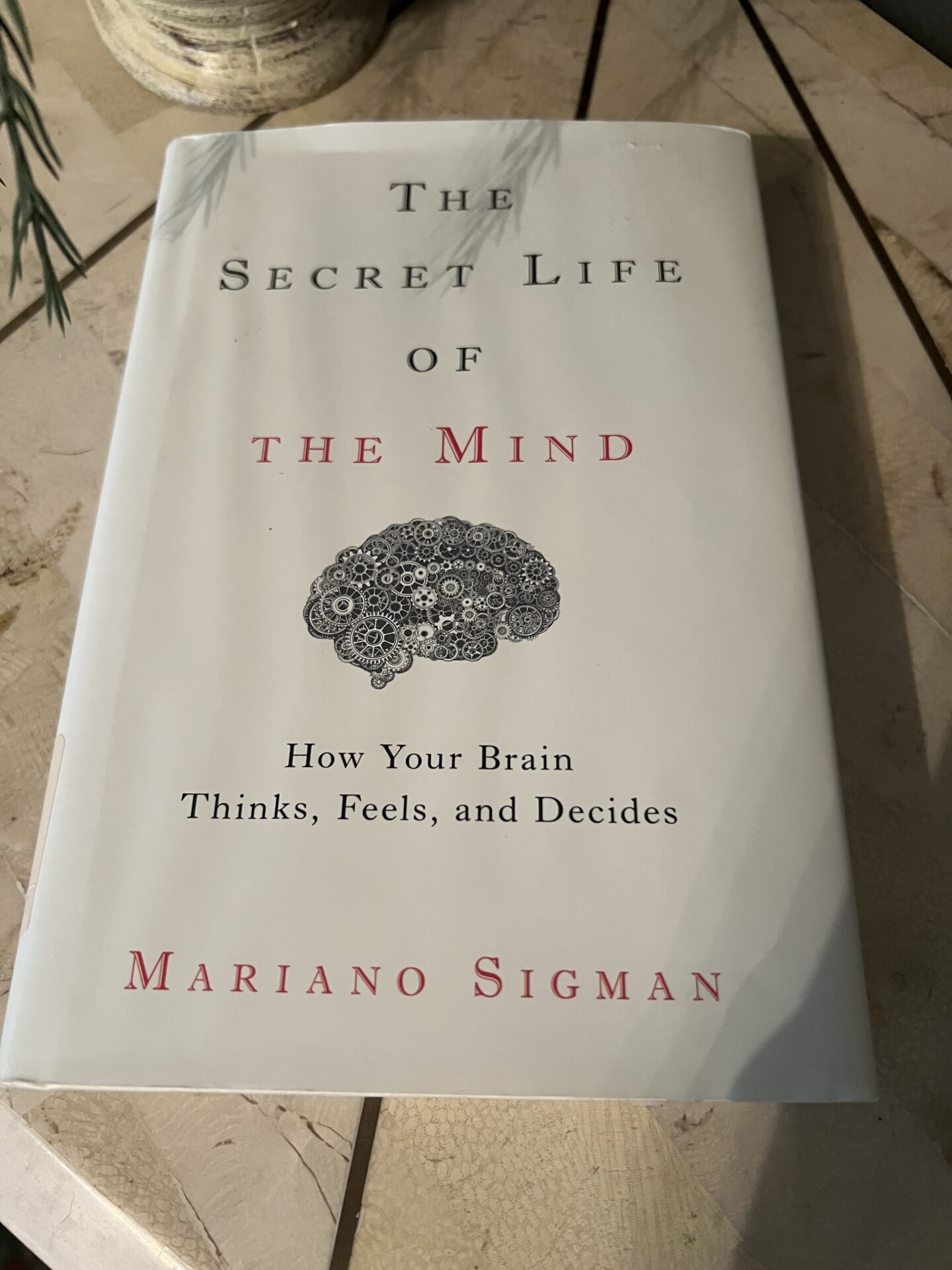
There are few mysteries greater than the one that exists within ourselves. We spend our entire lives using our minds, making decisions, forming memories, experiencing emotions, and searching for meaning, yet we understand so little about the very thing that shapes every moment of our existence. Mariano Sigman’s The Secret Life of the Mind: How Your Brain Thinks, Feels, and Decides invites readers into that hidden world… the place where thoughts are created, emotions are processed, decisions are formed, and our understanding of reality begins.
At its heart, Sigman’s book is not simply about neuroscience. It is about the human experience. It asks some of the oldest questions we have wrestled with: Why do we think the way we do? Why do we make the choices we make? How much of our behavior is conscious, and how much happens beneath the surface? Through years of research in cognitive neuroscience, Sigman explores the complicated relationship between our brains, our experiences, and the world around us.
What makes The Secret Life of the Mind such an engaging read is Sigman’s ability to take complex scientific ideas and connect them to everyday life. This is not a textbook filled with medical terminology that leaves the reader lost in technical details. Instead, Sigman tells a story about what it means to be human. He explores childhood development, learning, consciousness, decision-making, dreams, and the unconscious parts of our minds that influence us more than we often realize.
One of the most fascinating themes throughout the book is the idea that our minds are constantly working behind the scenes. Many of us like to believe that we are completely rational beings who carefully analyze every choice before making a decision. However, Sigman explains that the human brain is far more complicated. Our experiences, emotions, memories, and instincts all play a role in shaping the decisions we make.
This idea is both humbling and encouraging. It reminds us that we are not simply machines that process information. We are living, growing, changing individuals whose minds are constantly adapting. Every conversation we have, every challenge we face, and every lesson we learn leaves an imprint on who we become.
One of the most meaningful aspects of Sigman’s work is his discussion of learning and the developing mind. The human brain is not something fixed and unchangeable. Instead, it has an incredible ability to grow and adapt. The experiences we provide for children, the knowledge we pursue as adults, and the environments we create all influence how our minds develop.
This idea carries a powerful message: we are never finished becoming. Our past may influence us, but it does not have to define us. The brain’s ability to change gives hope that growth is always possible. Whether someone is learning a new skill, overcoming a difficult season, or simply trying to become a better person, the mind remains capable of transformation.
Another area Sigman explores is consciousness, the mysterious awareness that allows us to experience life. We know we have thoughts, but where do those thoughts come from? We experience emotions, but how does the brain create those feelings? We dream, imagine, and reflect, but what exactly is happening inside us during those moments?
The questions Sigman raises reveal something important: the more we learn about the mind, the more we realize how much remains unknown. Science has uncovered incredible discoveries about the brain, but it has also shown us how much mystery still exists.
For readers of What Grace Looks Like, this exploration of the mind naturally leads to deeper reflection. Understanding the brain can deepen our appreciation for the complexity of human beings. Scripture has long emphasized that humanity is wonderfully made. In Psalm 139:14, David writes:
“I praise you because I am fearfully and wonderfully made; your works are wonderful, I know that full well.”
While Sigman approaches the mind through the lens of neuroscience, his discoveries can inspire a sense of wonder that aligns with the biblical view that human life carries incredible value and purpose.
The Bible frequently speaks about the importance of the mind and the transformation that takes place within it. Romans 12:2 says:
“Do not conform to the pattern of this world, but be transformed by the renewing of your mind.”
This verse has often been understood as a reminder that our thoughts matter. The way we think influences the way we live. Sigman’s research, in a scientific sense, demonstrates just how powerful our thoughts, experiences, and mental patterns truly are.
One of the strongest lessons from The Secret Life of the Mind is that understanding ourselves requires humility. We often assume we know why we behave the way we do, why we believe certain things, or why we respond emotionally to situations. Yet the human mind is deeper and more complex than we often recognize.
That realization should not create frustration; it should create curiosity. It should encourage us to become more patient with ourselves and with others. If our own minds are this complicated, then perhaps we should be slower to judge the thoughts, struggles, and choices of those around us.
Sigman’s book also reminds us that people are more than the sum of their actions. Behind every person is a lifetime of experiences, memories, fears, hopes, and influences that shape who they are. A deeper understanding of the mind can lead to greater compassion.
This is where science and faith can have a meaningful conversation. Neuroscience helps us understand the mechanisms behind thought and behavior, while faith explores questions of meaning, purpose, and identity. Together, they remind us that human beings are incredibly complex creations worthy of understanding and care.
The Secret Life of the Mind is not a book that provides every answer. Instead, it encourages better questions. It invites readers to look inward and examine the incredible process happening within them every day. It reminds us that beneath every decision, every memory, and every emotion exists a fascinating story.
Mariano Sigman has written a book that encourages wonder. He shows readers that the human mind is not just an organ inside our bodies—it is the place where our experiences, relationships, dreams, and understanding of the world come together.
For anyone interested in psychology, personal growth, human behavior, or simply understanding what makes people who they are, The Secret Life of the Mind is a valuable and thought-provoking read. It challenges us to think differently about ourselves and others.
Perhaps the greatest takeaway is this: the more we discover about the mind, the more we realize how remarkable life truly is. We are constantly learning, growing, and becoming. And in that journey of understanding ourselves, we discover a deeper appreciation for the mystery and beauty of being human.
I have to say that I REALLY enjoyed reading this book. If you’re interested in checking it out for yourself, then visit my storefront.
Discover more from What Grace Looks Like
Subscribe to get the latest posts sent to your email.



Leave a Reply